What makes a story portrait special
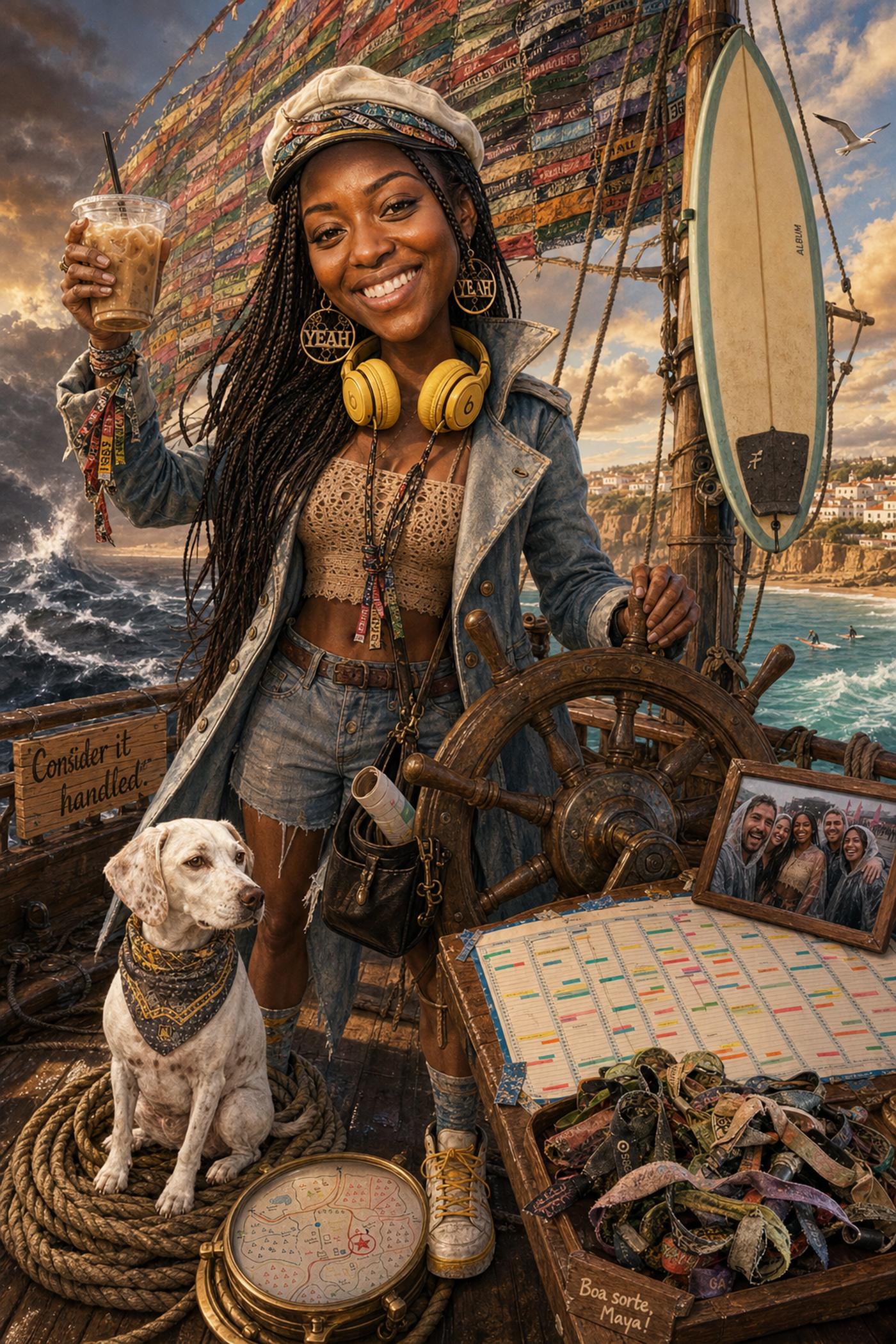
This is Maya's farewell portrait, made when she left her team after twelve years to open a surf-and-coffee café near Ericeira. Every detail in it came from somewhere: a photo, an answer in the interview, a line one of her colleagues wrote. Here is where.
Hover any marked detail in the picture. On a phone, tap.
From one photo of her
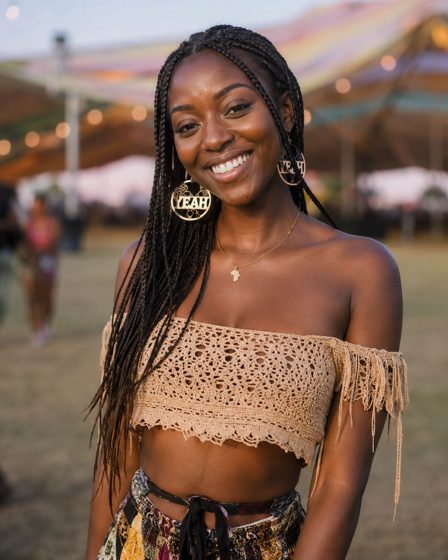
Her face
One good photo anchors the face. The braids, the smile and the hoops with YEAH cut into them are hers. The cap and the ship are the studio's.
From your own photo
The sail
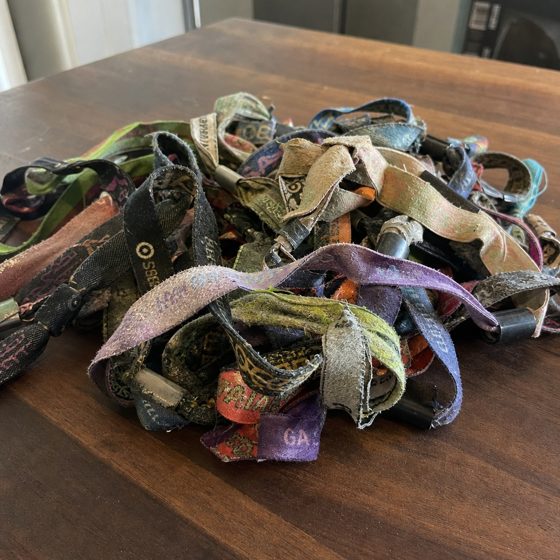
A heap of cut-off festival wristbands on a kitchen table, twelve years of them, sent in with one line on what they meant. The studio stitched them into the sail.
From your own photo
The wristbands, again
The same photo, painted as it is. One photo did two jobs in this picture: the thing itself, and the sail it became.
From a photo we asked for
Biscuit
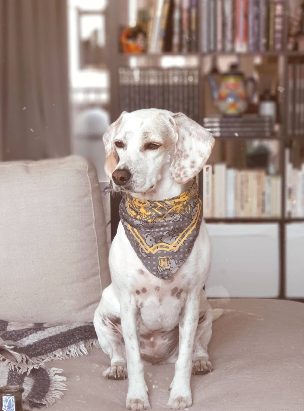
Her rescue dog, from his own photo. Same coat, same spots, same bandana. Two of the five colleagues mentioned him before they mentioned any piece of work.
From the group photo
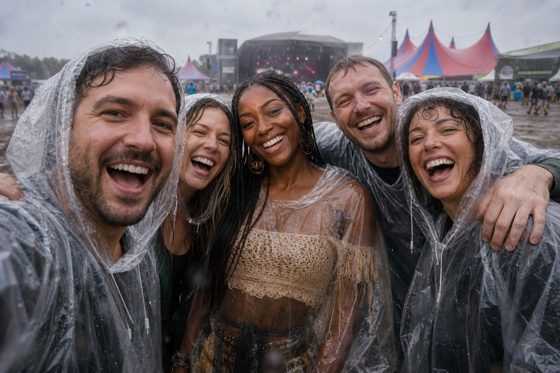
The team photo
The five of them at the festival, the year it rained and she had packed ponchos for everybody. Painted into the scene as a framed picture: same people, same poses. How a group photo appears in the scene is the studio's call.
Exact words
Consider it handled.
Her line
Somebody brings her a problem, she says these three words, and then it is handled. Three of the five sent it in without being asked. Painted letter for letter.
Exact words
Boa sorte, Maya!
The send-off
Portuguese for good luck, in the language of where she is going. The team's words, painted as written.
From your own photo
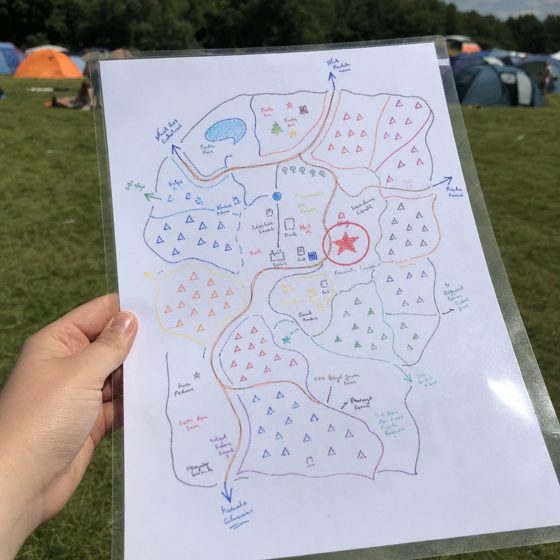
The compass
Every summer she hands out a hand-drawn map of the campsite, laminated so it survives the rain. Sent as a photo, with the story. In the picture it became her compass.
From a photo we asked for
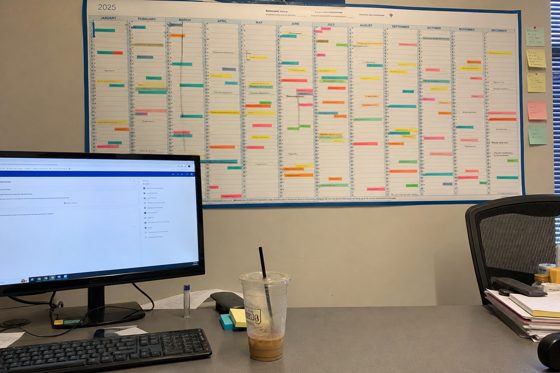
The wall planner
The planner came up in three of the answers, so the interview asked for a photo of her desk. Painted from the real one, colour-coded tape and all. Nobody else in the building can read it.
From a photo we asked for
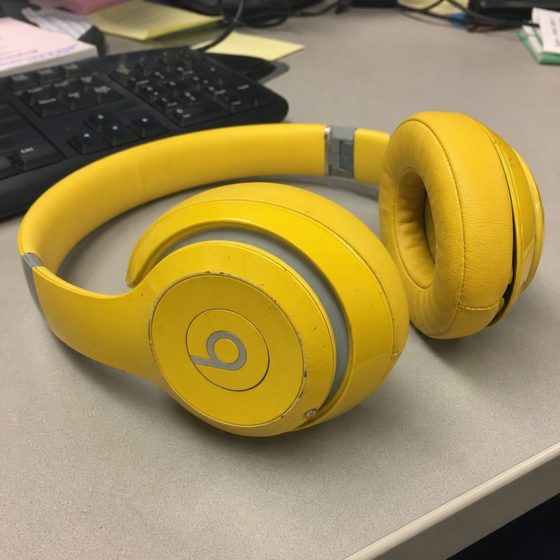
The headphones
Big, yellow, and around her neck rather than on her head. Always. Painted from the photo the interview asked for.
From the conversation
The iced coffee
Exactly one minute late to every standup, iced coffee in hand, for twelve years. Nobody sent a photo of the coffee. The interview alone put it in her hand.
From a photo we asked for
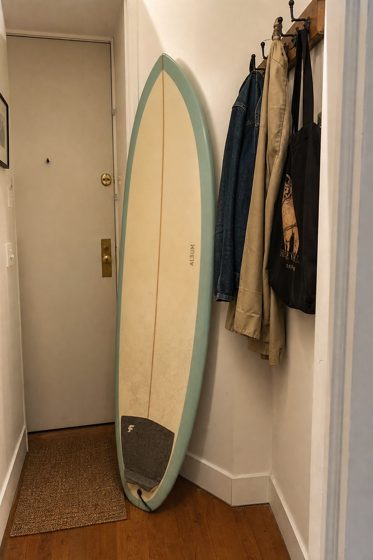
The surfboard
Her own board, from the photo of it by her front door. Where she is going, leaning against the mast.
From the conversation
The coast
Ericeira, on the Portuguese coast, where the café will be. No photo; the interview asked what comes next, and the answer became the horizon.
In this picture
13
details you can trace back
- 9 from a photo you send
- 4 from the conversation alone
Scroll down for the full feature list
What you can ask for
Seven things a story portrait can carry, and what each one was built from. Hover a line to light it up in the picture.
-
One good photo anchors the face, so it is Maya and not somebody like her. Warm, flattering, recognisable.
-
The interview goes through the drawers of a life: the habits, the running jokes, the loyalties, what comes next. The richer the answers, the fuller the scene.
-
Same care as the face. Real breed, real coat, real markings, from the animal's own photo.
-
The team photo or the family snapshot, painted into the scene as a picture. Same people, same poses. Where it sits and what it becomes is the studio's call.
-
Your own photos, each with a line in your words on what it means to them. Some are painted as they are. Some become something else.
-
The interview writes a short photo list for their story: the actual desk, the real board. Skip one and it is painted from imagination, and we say so before you decide.
-
An inside joke, a catchphrase, a send-off, reproduced character for character. Every other text surface is kept clean or left illegible, so nothing in the picture reads as garbled.
What you don't have to do
- You don't have to know how to describe what you want. The interview asks one question at a time, for about ten minutes.
- You don't have to chase colleagues and tidy up their answers. Forward them five questions, paste the replies in as they are. If three people name the same habit, that is exactly what we want to know.
- You don't have to spend an evening fighting a generator for a likeness. The face is anchored to your photo, and the misses are redone before anyone sees them.
- You don't have to check for six fingers or garbled lettering. A machine audit counts every visible finger before a proof may pass. Then a person rejects anything not good enough to send.
- You don't have to convince a print shop the file is good enough. It is a print master, sharp to A2.
- You don't have to gamble on whether it is good enough to give. You pick from finished proofs, and the picture you get is the one you picked.
How this one was made
Maya's portrait went the same route a paid order takes. A ten-minute interview with the colleague who collected the team's notes, a short photo list, three different concepts worked up, and a person at the studio judging every proof before the buyer saw any. The buyer chose the boldest of the three. The file is a print master, 4096 by 6144 pixels, sharp to A2.
AI is the brush. The stories are yours, the direction and the final judgment are ours, and the photos and the conversation are deleted about thirty days after delivery.
Maya is not a customer. She and her team were invented to show the process, and every photo on this page was made for that. Nothing here comes from a real buyer.
One portrait, €48
Order, and we send you a private link to the interview. Ten minutes of your time, then your piece within 48 hours.
Start a portrait — €48